
Spatial Risk Multipliers for BNG
The spatial risk multiplier is one of the most important parts of the Biodiversity Metric because it encourages biodiversity gains to be delivered as close as possible to the development site. This reflects the Biodiversity Gain Hierarchy, which aims to recreate lost habitats within the same local ecological context so that ecosystem continuity is maintained, genetic diversity is preserved, and the benefits of habitat creation remain visible to local wildlife and communities.
In practice, the spatial risk multiplier places a penalty on biodiversity units secured further away from the development. The further the off-site habitat bank is from the development’s Local Planning Authority or National Character Area, the more units a developer will need to purchase to meet the same requirement. For a large developement we can create a custom habitat bank for you to minimise your costs and maximise the potential revenue of your land, or you can buy units directly from a pre-established habitat bank, such as Southend Farm near Chichester.
For this reason, location is not just a background detail when choosing BNG . It is a strategic consideration that can affect both ecological value and project cost, which is why developers and consultants should review carefully whether a proposed habitat bank is the right geographic fit for their scheme.

How the spatial risk multiplier works
The Biodiversity Metric gives the strongest outcome to off-site habitat delivery that remains within the same LPA or the same NCA as the development site. In those cases, the spatial multiplier is effectively neutral, meaning there is no location penalty applied to the units.
If the off-site habitat lies in a neighbouring LPA or neighbouring NCA instead, the unit value is reduced. In practical terms, that means a developer must secure more units than would be needed from a site located in the same local area.
If the habitat bank is outside both the relevant LPA/NCA and beyond neighbouring areas, the penalty becomes greater again. This reflects the principle that biodiversity gains should be delivered as locally as possible rather than being displaced into unrelated landscapes.
Why this matters
The purpose of the spatial risk multiplier is not only administrative. It is intended to support local nature recovery by keeping biodiversity gains in the same broad landscape as the impact, where they are more likely to contribute to ecological networks, habitat corridors, and local conservation priorities.
A nearby site is therefore often the best outcome for both biodiversity and planning. It creates a clearer relationship between habitat loss and habitat compensation, and it helps ensure that investment in BNG supports the places most directly affected by development.
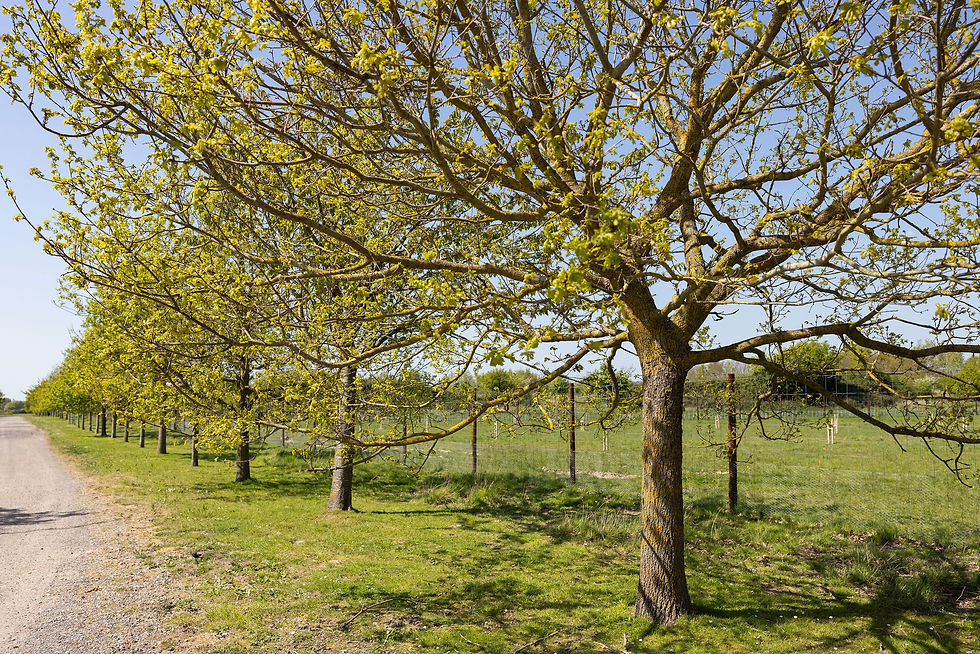
Southend Farm BNG Units
Southend Farm is located within Chichester LPA and the South Coast Plain National Character Area. That means it is well placed for developments that are also located within Chichester or within the South Coast Plain, because those projects will avoid a spatial penalty under the metric.
This local alignment makes Southend Farm a strong option for developments seeking off-site BNG units in the same planning and landscape context. It provides a clearer ecological link between the development and the habitat gain site, which is exactly what the spatial risk multiplier is intended to reward.
Applying the multiplier to Southend Farm
When considering Southend Farm for BNG units, the location of the development site should be reviewed carefully against both the relevant LPA and NCA. Your ecologist or BNG consultant can use this information to assess whether Southend Farm offers the right spatial fit for your project.
For developments in Chichester LPA, the multiplier applied to Southend Farm would be 1, meaning no spatial penalty, because the habitat bank sits within the same LPA.
For developments in the South Coast Plain NCA, the multiplier applied to Southend Farm would also be 1, meaning no spatial penalty, because the site lies within the same National Character Area.
For developments in a neighbouring LPA to Chichester, the unit value would be lower than a same-area match, so more units would be needed than if the development were within Chichester itself, typically between 1.33 and 1.5 times the initial value.
For developments in a neighbouring NCA to the South Coast Plain, the same principle applies. If the development sits outside the South Coast Plain but within an adjoining landscape area, the units at Southend Farm would attract a spatial penalty of between 1.33 and 1.5 times, compared with a same-NCA development.
For developments in more distant parts of England, the penalty would be 2 times the initial value, because the habitat gain would be delivered outside both the relevant local planning area and the relevant landscape context.

Choosing a site close to development
A habitat bank close to the development site is usually the most efficient and ecologically meaningful choice. It helps developers avoid unnecessary spatial penalties while also supporting habitat creation that is better connected to the affected landscape and more relevant to local species and communities.
For projects in Chichester and the South Coast Plain, Southend Farm offers that local connection. Its position within the same planning and landscape framework makes it a practical option for developments that need off-site units without moving biodiversity gains away from the area where they are most needed. This is good for local people, meaningful to local planning authorities, & better for nature.
There's a lot to consider with BNG, our expert team offer an initial free of charge consultation on your development site and the options available to you. Get in contact with us to book an appointment.


Comments